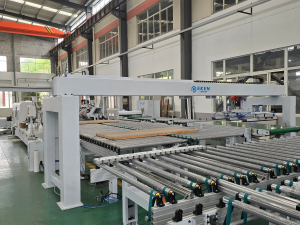
Global Market Trends of Automated Wooden Door Production Lines
Insights for International Buyers, Exhibitions, and Industry Decision-Makers
As the global manufacturing industry accelerates toward automation and digitalization, the wooden door sector is undergoing a significant transformation. Automated wooden door production lines are rapidly becoming a strategic investment for manufacturers worldwide, driven by rising labor costs, growing demand for customization, and stricter quality and sustainability standards.
This article explores the global market trends of automated wooden door production lines, providing insights for international buyers, project developers, and industry professionals attending global exhibitions or evaluating long-term manufacturing strategies.
1. Key Drivers Behind the Global Growth of Automation
The global demand for automated wooden door production lines continues to grow steadily, supported by several structural factors.
1.1 Expansion of the Construction and Interior Markets
Urbanization, infrastructure development, and large-scale residential and commercial projects are increasing demand for wooden doors, particularly in Europe, the Middle East, and emerging markets. Developers and contractors increasingly expect stable quality, shorter lead times, and reliable supply capacity.
1.2 Rising Labor Costs and Workforce Challenges
In Europe and other developed regions, labor shortages and rising wages are pushing manufacturers to replace labor-intensive processes with automated solutions. Automation ensures consistent output while reducing dependency on skilled manual labor.
1.3 Shift Toward Customization and Project-Based Orders
Global markets are moving away from purely standardized products. Hotels, residential compounds, and commercial projects often require customized door sizes, finishes, and performance features. Automated production lines with flexible configurations are better suited to handle this shift.
2. Regional Market Trends and Characteristics
2.1 Europe: Quality, Sustainability, and Compliance
Europe remains one of the most mature markets for automated wooden door production lines. Manufacturers prioritize:
-
High-precision machining and stable quality
-
Compliance with strict environmental and safety regulations
-
Energy-efficient and low-emission production processes
Automation supports European manufacturers in meeting CE standards, VOC regulations, and sustainability requirements while maintaining competitiveness.
2.2 North America: Large-Scale Customization and Productivity
In North America, automation is driven by a combination of high-volume production and growing demand for customization. Automated wooden door production lines enable manufacturers to efficiently manage diverse product ranges without sacrificing productivity.
2.3 Middle East and Asia-Pacific: High Growth Potential
The Middle East, supported by large construction and hospitality projects, is one of the fastest-growing markets for automated wooden door production lines. Investors and manufacturers in the region are increasingly focused on:
-
High-capacity production
-
Project-based customization
-
Long-term equipment reliability
Asia-Pacific markets also continue to expand, with automation playing a key role in industrial upgrading and export-oriented manufacturing.
3. Technology Trends Shaping Automated Wooden Door Production Lines
The global market growth is closely linked to continuous technological advancement.
3.1 Digitalization and Smart Manufacturing
Modern automated wooden door production lines increasingly integrate MES systems, industrial IoT, and real-time data monitoring. These technologies improve production transparency, equipment utilization, and decision-making efficiency.
3.2 Flexible and Modular Production Design
Flexible manufacturing systems allow quick switching between different door designs, sizes, and specifications. This capability is essential for manufacturers serving international project-based orders.
3.3 Robotics and Human–Machine Collaboration
Robotic handling, loading, and transfer systems are becoming standard components of automated wooden door production lines. These solutions enhance production stability, improve workplace safety, and support continuous operation.
4. Changes in the Competitive Landscape
As global demand increases, the competitive landscape of automated wooden door production line suppliers is evolving:
-
Technology-driven suppliers with integrated solutions are gaining market share
-
Traditional machinery manufacturers are transitioning toward full production-line solutions
-
After-sales service, local support, and system integration capabilities are becoming key selection criteria for international buyers
For global procurement teams, long-term reliability and service capability are now as important as initial equipment performance.
5. Future Outlook: What to Expect in the Coming Years
Looking ahead, several trends are expected to define the future of the global market:
5.1 Automation Becoming an Industry Standard
For medium and large wooden door manufacturers, automated production lines will increasingly be viewed as standard infrastructure rather than optional upgrades.
5.2 Customization Driving Flexible Automation Investment
As market demand shifts toward small-batch and customized orders, investment in flexible automated production lines will continue to rise.
5.3 Sustainability and Energy Efficiency as Core Requirements
Environmental performance will play a larger role in equipment selection, especially in Europe and the Middle East, driving demand for energy-efficient and environmentally compliant automation solutions.
Conclusion
The global market trends of automated wooden door production lines clearly indicate sustained growth driven by technological advancement, changing customer demands, and global industrial upgrading. Automation is no longer solely about increasing output—it is about ensuring quality consistency, enabling customization, and meeting international standards.
For manufacturers, developers, and international buyers, understanding these trends is essential for making informed investment decisions and building competitive, future-ready production capabilities.