As the global home-building materials industry moves toward smart manufacturing, automated wood-door production lines have become essential investments for companies seeking higher efficiency, consistent quality and stronger market competitiveness. For exporters targeting Europe, the Middle East and other overseas markets, choosing the right line directly affects future production stability, product quality and return on investment.
This guide walks you through key decision points—production needs, technology configuration, quality standards and long-term operating costs—to help you avoid common pitfalls.
1. Clarify Your Production Needs First
Before comparing machines, define your business position:
-
Annual output and shift pattern
-
Product mix (solid wood, composite, engineered, custom)
-
Batch size vs. customization ratio
-
Target-market requirements (EU, Middle East, Africa) on dimensions, finishes and quality
Only with clear answers can equipment selection become meaningful.
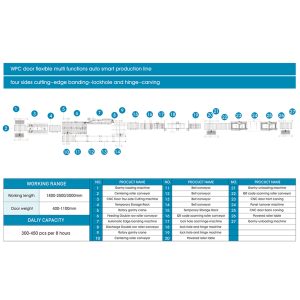
2. Focus on the Whole Line, Not Single Specs
An automated line is not a simple collection of machines but a synchronized system. Check:
-
Automatic feeding & conveyor systems
-
Central control (PLC / industrial PC)
Compatibility, stability and inter-machine communication are more critical than individual parameters.
3. Match Automation Level to Your Reality
Higher automation is not always better.
-
Small/medium plants: semi-auto + key-process automation may suffice
-
Mature factories: fully integrated lines are viable
-
Custom-oriented: flexible, quick-changeover equipment is essential
Align automation with your workforce skills, technical support and maintenance capacity.
4. Demand Stability & International Standards
For Europe and the Middle East, verify:
-
CE or equivalent safety certification
-
Electrical components from global brands (Siemens, Schneider, etc.)
-
Frame design for 24/7 continuous running
-
Documented overseas project references
Reliable equipment minimizes downtime and helps you pass customer audits.
5. Evaluate Total Cost of Ownership (TCO)
Look beyond purchase price:
-
Power & material consumption
-
Spare-part consumption and price
-
Maintenance complexity
-
Supplier response time for service & upgrades
A slightly higher initial investment often pays back faster through lower running costs.
6. Choose a System Solution Provider
Prefer suppliers who can deliver:
-
Process planning & line layout design
-
Market-specific customization experience
-
On-site installation, commissioning and training
-
Long-term technical support & upgrade roadmap
A turnkey partner reduces risk and accelerates ramp-up.
Conclusion: Rational Selection Maximizes ROI
Choosing an automated wood-door production line is a strategic decision involving technology, management and finance. Base your choice on real needs, balance automation with capability, insist on international standards and calculate lifetime costs.
For manufacturers eyeing Europe and the Middle East, the right automated line is not just a production tool—it is your passport to global markets.